
Sage connected to your eCommerce.
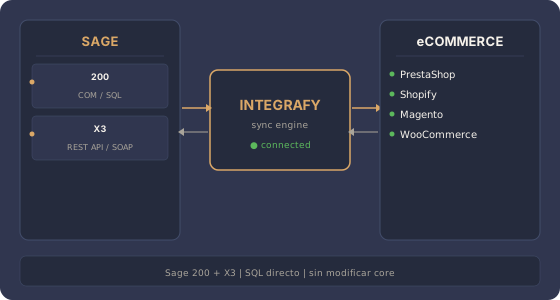
Sage 200 or Sage X3 — the version doesn't matter. COM, direct SQL or REST API: Integrafy speaks Sage. Two-way real-time sync of stock, orders and tariffs without touching your ERP.
Why Sage is an integration challenge
Sage isn't a single product — it's a family. Sage 200 has been in the market for decades and its integration requires accessing data through COM objects or direct SQL queries against its database. There's no standard REST API on the classic versions, which leaves most generic connectors behind.
Sage X3 is another story: a more modern platform with REST and SOAP APIs, but with a complex data model that includes sites, legislations and advanced commercial terms. Integrafy has native connectors for both worlds because we know many industrial companies run Sage in Europe.
What does Integrafy sync between Sage and your eCommerce?
Frequently asked questions about Sage + eCommerce integration
What's the difference between integrating Sage 200 and Sage X3?
Sage 200 is a more traditional ERP that requires connection via COM objects or direct SQL access to its database. Sage X3 is a more modern platform with REST and SOAP APIs. Integrafy ships dedicated connectors for each.
Does Integrafy use COM or API to connect with Sage?
It depends on the version. For classic Sage 200 we use COM objects or direct SQL with scheduled reads. For Sage X3 and recent cloud versions we connect via REST API. In every case, the Sage installation stays untouched.
Does it work with Sage in the cloud?
Yes. Sage cloud versions (Sage X3 Cloud, Sage 200 Advanced) expose APIs that Integrafy consumes directly. For on-premise versions without API, we install a lightweight agent that reads the Sage database safely.
Can it handle large catalogs from Sage?
Yes. Integrafy Data is built for industrial catalogs with 100,000+ references. Sage items are synced with attributes, variants, customer-specific tariffs and per-warehouse stock incrementally.
How long does Sage implementation take?
A standard Sage ↔ eCommerce integration goes live in 2-4 weeks. Sage 200 with SQL access may need more initial mapping time. Sage X3 with REST API is generally faster. Historical data migration is included if required.
Got Sage and need to sell online?
Tell us your case. Free 30-minute integration diagnosis.